


Dictionary

Impressionism
Impressionism [French: "impression"] is a style used primarily in painting that developed in France in the last quarter of the 19th century and then spread to other countries. The term Impressionism as applied to that style was coined by the French art critic Louis Leroy, who derived it ironically from the title of a painting by Claude Monet ("Impression, soleil levant", 1872) depicting a harbour scene at sunrise. Impressionist painters tried to capture an object as it appeared at a particular moment in the colors that they happened to see it. The fleeting impression created by a motif had priority over the significance of its content. Impressionism thus opposed academic painting and represented a new form of naturalism. The main Impressionist genre is landscape, which was now usually painted outdoors [French: "en plein air"] rather than in the studio, which had been the practice till then. The Impressionists used light, glowing colors. And, so as not to impair the purity of color, their paints were not mixed on the palette to produce particular tints but instead were applied directly to the canvas in short brush strokes that were very close to one another so that the color tones desired were mixed, as it were, in the eye of the beholder standing at some distance from the painter. Impressionist painters worked wet-into-wet (Italian: à prima painting) without waiting for a layer of paint to dry before applying the next. Exaggeration of this visual principle gave rise around 1885 to Neo-Impressionism or Pointillism (leading exponents are Georges Seurat and Paul Signac). The Impressionists definitely drew on works by earlier artists who had cultivated a more casual style of painting that worked from color such as the Spanish painters Diego Velázquez and Francisco de Goya and the English painters J. M. W. Turner and John Constable. French artists who are regarded as forerunners of Impressionism such as Eugène Delacroix, Édouard Manet, Gustave Courbet, the Barbizon School and the Dutch painter Johan Barthold Jongkind were another important source of inspiration. The following are important Impressionist painters:
Paul Cézanne (1839-1906)
Frédéric Bazille (1841-1870)
Lovis Corinth (1858-1925)
Edgar Degas (1834-1917)
Paul Gauguin (1848-1903)
Vincent van Gogh (1853-1890)
Karl Hagemeister (1848-1933)
Jacques Lalande (*1921)
Max Liebermann (1847-1935)
Édouard Manet (1832-1883)
Claude Monet (1840-1926)
Berthe Morisot (1841-1895)
Camille Pissarro (1830-1903)
Pierre-Auguste Renoir (1841-1919)
Alfred Sisley (1839-1899)
Max Slevogt (1868-1932)
Robert Sterl (1867-1932)
Fritz Wildhagen (1878-1956)
Impressionism [French: "impression"] is a style used primarily in painting that developed in France in the last quarter of the 19th century and then spread to other countries. The term Impressionism as applied to that style was coined by the French art critic Louis Leroy, who derived it ironically from the title of a painting by Claude Monet ("Impression, soleil levant", 1872) depicting a harbour scene at sunrise. Impressionist painters tried to capture an object as it appeared at a particular moment in the colors that they happened to see it. The fleeting impression created by a motif had priority over the significance of its content. Impressionism thus opposed academic painting and represented a new form of naturalism. The main Impressionist genre is landscape, which was now usually painted outdoors [French: "en plein air"] rather than in the studio, which had been the practice till then. The Impressionists used light, glowing colors. And, so as not to impair the purity of color, their paints were not mixed on the palette to produce particular tints but instead were applied directly to the canvas in short brush strokes that were very close to one another so that the color tones desired were mixed, as it were, in the eye of the beholder standing at some distance from the painter. Impressionist painters worked wet-into-wet (Italian: à prima painting) without waiting for a layer of paint to dry before applying the next. Exaggeration of this visual principle gave rise around 1885 to Neo-Impressionism or Pointillism (leading exponents are Georges Seurat and Paul Signac). The Impressionists definitely drew on works by earlier artists who had cultivated a more casual style of painting that worked from color such as the Spanish painters Diego Velázquez and Francisco de Goya and the English painters J. M. W. Turner and John Constable. French artists who are regarded as forerunners of Impressionism such as Eugène Delacroix, Édouard Manet, Gustave Courbet, the Barbizon School and the Dutch painter Johan Barthold Jongkind were another important source of inspiration. The following are important Impressionist painters:
Paul Cézanne (1839-1906)
Frédéric Bazille (1841-1870)
Lovis Corinth (1858-1925)
Edgar Degas (1834-1917)
Paul Gauguin (1848-1903)
Vincent van Gogh (1853-1890)
Karl Hagemeister (1848-1933)
Jacques Lalande (*1921)
Max Liebermann (1847-1935)
Édouard Manet (1832-1883)
Claude Monet (1840-1926)
Berthe Morisot (1841-1895)
Camille Pissarro (1830-1903)
Pierre-Auguste Renoir (1841-1919)
Alfred Sisley (1839-1899)
Max Slevogt (1868-1932)
Robert Sterl (1867-1932)
Fritz Wildhagen (1878-1956)
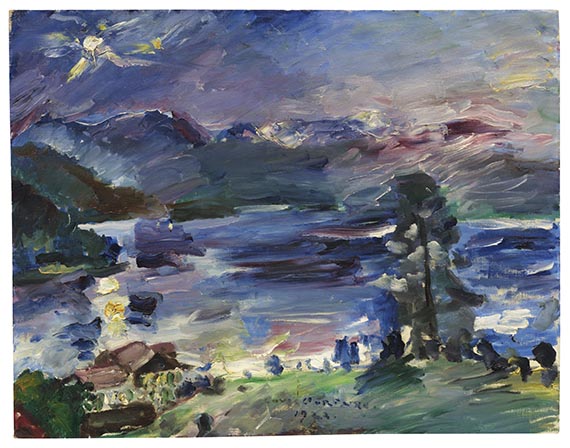
Offers for Impressionism
Headquarters
Joseph-Wild-Str. 18
81829 Munich
Phone: +49 89 55 244-0
Fax: +49 89 55 244-177
info@kettererkunst.de
Louisa von Saucken / Undine Schleifer
Holstenwall 5
20355 Hamburg
Phone: +49 40 37 49 61-0
Fax: +49 40 37 49 61-66
infohamburg@kettererkunst.de
Dr. Simone Wiechers / Nane Schlage
Fasanenstr. 70
10719 Berlin
Phone: +49 30 88 67 53-63
Fax: +49 30 88 67 56-43
infoberlin@kettererkunst.de
Cordula Lichtenberg
Gertrudenstraße 24-28
50667 Cologne
Phone: +49 221 510 908-15
infokoeln@kettererkunst.de
Hessen
Rhineland-Palatinate
Miriam Heß
Phone: +49 62 21 58 80-038
Fax: +49 62 21 58 80-595
infoheidelberg@kettererkunst.de
We will inform you in time.